
History
Two centuries of a gentle medicine — and the forces that nearly erased it.
From a German doctor's self-experiment with Peruvian bark to the growth of a network of hundreds of homeopathic hospitals — and the 1910 political maneuver that reshaped American medicine. This is the story of homeopathy: its discovery, its golden age, its near-disappearance, and its defiant return.
Homeopathy is not a trendy new idea that appeared on a wellness shelf in the last decade. It is one of the oldest formal systems of medicine still in continuous use — much older and more time-tested than all of the pharmaceutical companies that dominate medicine today. For more than a hundred years it was a mainstream, respected branch of Western medicine, taught in its own medical schools and practiced in its own hospitals. And it is still the second most popular and commonly used system of medicine in the world according to the World Health Organization.
Learning the history of homeopathy can teach us something important: the medicine a society considers “standard” is not simply the one that won a fair contest of ideas. Political motivations, financial incentives, and power plays have more to do with the outcome than pure scientific efficacy. As you learn how homeopathy began, how it grew, and how it was pushed to the margins, remember something important: The choice over what medicine you use to care for your body is your decision alone. No matter what you choose, question everything, think critically, do your own research, and ultimately choose from a center of knowledge, not from fear.
1844
The American Institute of Homeopathy was founded — the first national medical organization in the United States
~22
homeopathic medical universities operating in the U.S. by the late 1800s
100+
homeopathic hospitals and dispensaries documented across the United States by the late 1800s
400 million
people worldwide are currently estimated to use homeopathy today
A doctor, a fever, and a radical idea
In the late 1700s, Samuel Hahnemann was a working physician in Germany — and a frustrated one. The medicine of his day was especially brutal: heavy metals, violent purges, bloodletting. Patients were often treated more harshly by their "medicines" than by the diseases themselves. Hahnemann soon chose to give up his medical practice rather than continue harming people, and as he was proficient in nine different languages, began supporting his family by translating medical and scientific texts instead.
The story turns on a single translation. While translating William Cullen’s Materia Medica into German, Hahnemann read Cullen’s claim that Peruvian bark (cinchona) cured malaria. He was skeptical. So as any good researcher would, he decided to test it. Wary of harming anyone else, he decided to test it on himself.
Taking repeated doses of cinchona, Hahnemann developed symptoms that mimicked the intermittent fever of malaria — chills, flushing, throbbing. When he stopped, the symptoms stopped. He had, in effect, reproduced the very disease the bark was known to cure. From this and years of further self-experiments and case records, he articulated the principle that would define homeopathy: similia similibus curentur — like cures like. A substance that can produce a set of symptoms in a healthy person can, in a carefully prepared tiny dose, safely stimulate healing of similar symptoms in a sick one.
He published the principle in 1796 and, in 1810, the Organon of Medicine — the foundational text of homeopathy. He also developed the method of potentization: repeated dilution and vigorous shaking at each step, which he found increased the substance's medicinal qualities while reducing its toxicity. The result is a medicine gentle enough for infants and free of the violent side effects that had driven Hahnemann from conventional practice in the first place.
A method born of conscience
Hahnemann did not set out to invent an alternative medicine. He set out to stop hurting his patients and find a better way. Homeopathy began as a physician’s refusal to accept that harshness was the price of healing — and a search for a gentler approach.
How homeopathy conquered two continents
Homeopathy spread with remarkable speed. From Germany it moved through Austria, France, and Britain, and crossed the Atlantic to the United States in the 1820s. There it found especially fertile ground. By the 1840s, American homeopaths had organized the American Institute of Homeopathy (1844) — notably, the first national medical organization in the United States, predating the American Medical Association (AMA) itself. Nearly 200 years later, the American Institute of Homeopathy is still operating today, as is, of course, the AMA.
Over the second half of the 19th century, homeopathy built a parallel but fully accredited medical infrastructure alongside the era’s prevailing medical practice, often called allopathy or allopathic medicine. Leaders in the homeopathic medical field established their own professional medical colleges, hospitals and dispensaries, journals, and licensing boards. At the field’s peak, historians count roughly two dozen homeopathic medical colleges and well over a hundred homeopathic hospitals and pharmacies across the United States.
In contrast to homeopathy, which uses tiny doses of substances to gently trigger the body's natural healing response, allopathy uses strong doses of substances or other physical interventions to force a particular reaction from the body. Especially earlier in this period, allopathic medicine commonly included bloodletting, purging, leeches, and strong arsenic or mercury doses in an attempt to suppress symptoms and cure the patient through powerful interventions. Today allopathic medicine has evolved into the use of chemical drugs and surgery, although the underlying principles remain the same. It sees the body as something helpless that must be fixed through force, while homeopathy sees the body as wise and self-healing.
Trusted by the prominent
Homeopathy’s patients included many of the era’s most recognizable names. Mahatma Gandhi and Mark Twain both wrote admiringly of it. John D. Rockefeller Sr. personally used homeopathic care and became a passionate lifelong advocate, although, interestingly and importantly, vast funding by his foundation in opposition to homeopathy was a major factor in its decline after the turn of the century. Homeopathy at the time was favored by large numbers of America's ultra-wealthy. In Britain, homeopathic physicians attended the royal household — a patronage that continues to this day.
A record during the epidemics
During the cholera and yellow fever epidemics of the 1800s, homeopathic hospitals reported markedly lower death rates than their conventional counterparts. According to government records, expected death rates for untreated cholera at the time were ~50%. Conventional hospitals had a death rate for cholera of 46%, while homeopathic hospital death rates for cholera were only 18.4% (Report of the Committee for Scientific Inquiries (Medical Council, 1855), Parliamentary Return, House of Commons (1854-55)). These outcomes were reported at the time and became a major driver of the public’s growing trust in homeopathy.
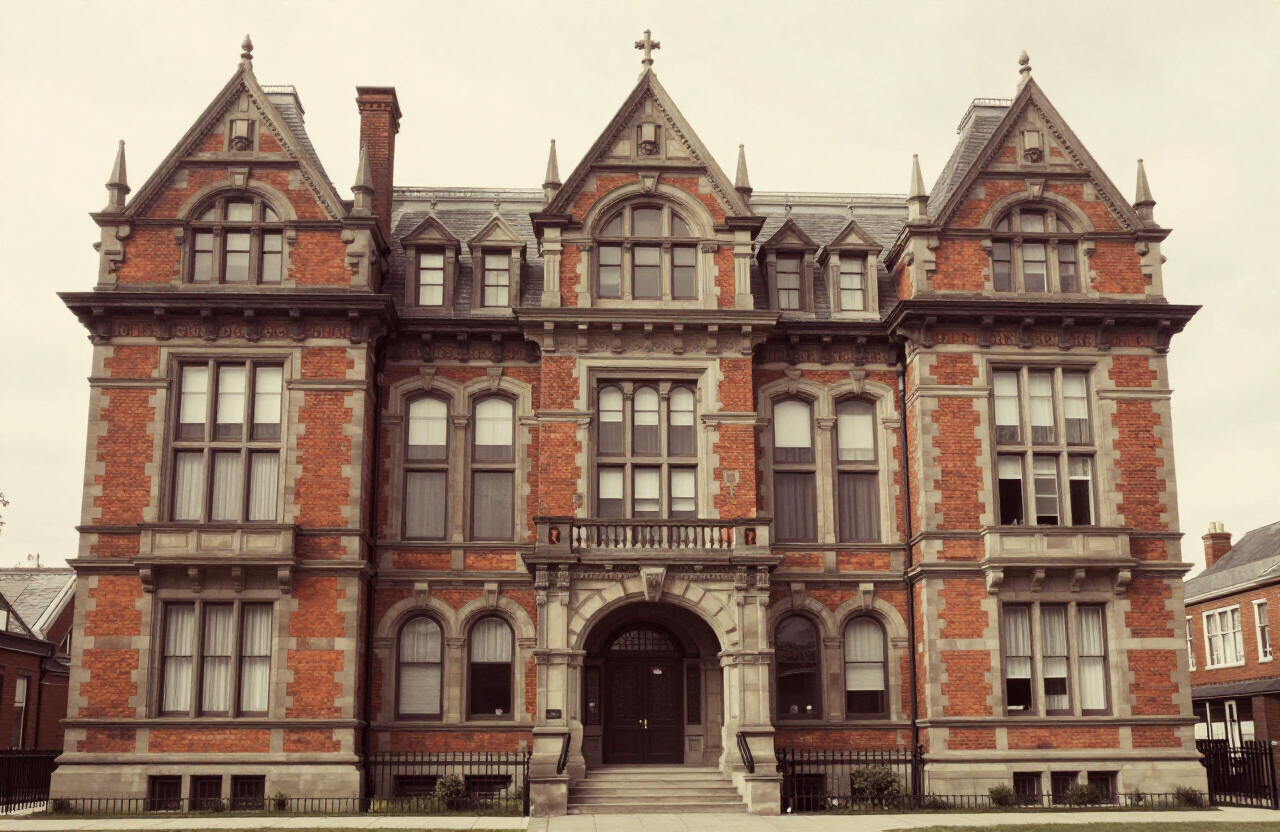
At its peak, homeopathy operated a full parallel system of hospitals and medical colleges across the United States and Europe — a scale that is difficult to imagine from today’s vantage point.
The Flexner Report of 1910
A few years after the American Institute of Homeopathy was formed in 1844, allopathic medicine formed its own organization in response, the American Medical Association (AMA), in 1847. By the early 1900s, the AMA’s Council on Medical Education wanted to establish its standard of medical care as the only valid form of medicine. In 1908, it contracted with the wealthy and influential Carnegie Foundation, who funded and hired a high school teacher named Abraham Flexner with no medical training to provide a critical assessment of every medical school in the United States and Canada and to create a report on the state of medical education in North America. In just 16 months, he completed his visits to 155 medical colleges and 12 postgraduate schools, which means he could not have spent more than 2 days at any one college — even if he took no days off and had zero travel time between schools. His findings and recommendations were published in 1910 as the Carnegie Foundation Bulletin Number Four — a book-length report known ever since as the Flexner Report.
The report’s stated conclusion was straightforward and, at first glance, hard to argue with: essentially that medical schools should be scientifically rigorous, well-equipped with laboratories, staffed by full-time faculty, and affiliated with teaching hospitals. Flexner championed the model pioneered at Johns Hopkins — a research-oriented, laboratory-based, allopathic curriculum.
How the standards favored one model. However, the criteria Flexner laid down were not neutral measures of effective healing; convenient for the powers that hired him, they simply described the allopathic school model as it already existed. A “proper” school was expected to teach anatomy, physiology, chemistry, and pharmacology in dedicated laboratories; professors had to be full-time faculty who were not actively practicing medicine or treating patients; and schools were expected to train students on the wards of a large teaching hospital organized around surgery and drug therapy. Homeopathic and other naturopathic schools organized learning differently — around individualized case-taking, the materia medica of remedies, and clinical observation in smaller community hospitals. Because the report measured every school against the allopathic template, those programs were judged deficient by definition, regardless of how well they trained their own practitioners or, more importantly, their efficacy in healing.
The standards it laid out were also prohibitively expensive, which meant schools and hospitals needed outside funding to survive. The laboratories, full-time faculty, and large teaching hospitals that the report recommended cost money that small, tuition-funded homeopathic and botanical schools did not have, and the report offered them no public funding to bridge the gap. The only institutions able to continue teaching were those funded privately by large philanthropic funders. At that time, the primary funder of medical institutions was the Rockefeller Foundation, which subsequently chose to fund only institutions that followed the Flexner Report's recommendations. This meant large, white, male, mainstream hospitals and colleges that followed the allopathic drug model of medicine had the funding to continue to grow, while all other medical models were quietly squeezed out. Worse, the Flexner Report's recommendations quickly became the yardstick that state licensing boards and accreditation bodies used to decide which schools could operate, grant degrees, and attract students. Schools that failed to meet the allopathic benchmark lost their accreditation, their access to state grants, and ultimately their students. The consequences, as a result, were dramatic and uneven. The number of U.S. medical schools fell from roughly 155 in 1904 to around 66 by 1930. Schools that could not afford laboratories, that were small, or that taught outside the allopathic model were shuttered or absorbed. Five of the seven African-American medical colleges at the time were permanently closed, as were all but one of the women's medical colleges. As admission to mainstream medical colleges was difficult or impossible for many years for either group, the rate of African-Americans and females working in the medical field is still struggling to equalize and recover from the consequences of the report. Homeopathic and naturopathic schools were hit especially hard. Eventually every homeopathic medical college closed or was merged into a conventional institution, and all the homeopathic hospitals followed.
A personal conviction and an institutional tide
The Rockefeller name sits at the center of a striking historical contrast. John D. Rockefeller Sr. personally used homeopathic care for much of his life and spoke of it admiringly; he considered homeopathic physicians his trusted doctors and credited them with his long life. That much is documented. Yet the Rockefeller Foundation — established in 1913 and run by his son, John D. Rockefeller Jr., together with a professional staff — became the single largest private funder of American medical education, and it channeled its grants exclusively toward allopathic institutions. Schools that taught homeopathy, naturopathy, or other botanical medicine received no comparable support and, starved of funding and subsequently accreditation, disappeared.
How can one man's personal loyalty to homeopathy and his own foundation's role in its marginalization coexist? History hasn't recorded a clear answer. Possibly it occurred because the Foundation did not remain Rockefeller Sr.'s personal project: it was a professionally managed institution under his son, Rockefeller Jr., and advisors such as Frederick T. Gates, who may have had financial incentives or personal beliefs that aligned them with the allopathic model of medicine and directed grants from the Foundation accordingly. This left a strange result: a family that personally trusted homeopathy for their own health helped fund the very reforms that ultimately removed it from mainstream American medicine.
The rise of pharmaceutical medicine
As the allopathic schools that got funded and survived expanded, they aligned naturally with the rapidly growing pharmaceutical industry. The early 20th century brought germ theory into clinical practice, which was a benefit for the drug companies, for now they had a 'bad guy' to justify the use of their strong drugs on the body, no matter the side effects. First came the antibiotics, then an expanding pharmacopeia of synthesized drugs. Money was poured into marketing and media campaigns, telling everyone how much healthier they were becoming, so we all came to believe it, even as public health declined to the grievously low historical levels we see today.
It would be too simple to say that only a single report caused the domination of pharmaceutical medicine throughout the last century. Many forces, frequently funded by the same parties, converged. But the Flexner Report was a decisive hinge. It helped ensure that pharmaceutical medicine would be accepted not as one option among several, but as the one and only standard, based on one non-medically trained man's arbitrary requirements like institutional size and faculty employment, enforced aggressively and dogmatically from the highest levels possible without regard to actual healing efficacy.
The result was a century in which a single model of medicine came to define what “real” treatment meant — and in which the gentle, less-profitable tradition that had once run alongside it was largely forgotten by the public it had served.
A choice, not a verdict
Homeopathy did not fade because it was disproven or dangerous. It faded because the institutions that carried it were dismantled by the competing, more profitable model that was concurrently being scaled up. Recognizing this is not nostalgia — it is simply the understanding of why one medicine is now considered “standard” - and whether it earned that distinction through its merits and deserves our trust.
A near-disappearance — and a defiant resurgence
Homeopathy did not die. While it was forced out from mainstream American medicine, it flourished elsewhere. In India it became a government-recognized system of medicine with hundreds of colleges and hospitals and tens of thousands of practitioners. Across much of Europe — France, Germany, Switzerland, the Netherlands — it remained in continuous use, often covered by national health systems. In Britain, the royal family’s patronage of homeopathy, begun in the 1800s, continued unbroken into the 21st century.
Today, while homeopathy is often publicly dismissed as some fringe 'new-age' health movement, the World Health Organization counts homeopathy as the second largest system of medicine in the world by number of users, with hundreds of millions of people across dozens of countries relying on it. In the United States and across the world, families are rediscovering it for exactly the reasons it first caught on: it is gentle, safe, affordable, available without a prescription, easy to use at home, and capable of extraordinary results.
The history of homeopathy is, in the end, a story about the power of truth and justice. A system of medicine discovered by a doctor who refused to harm his patients survived a century of institutional and political pressure and is being chosen again by a new generation — not because the government decreed it, but because it works so well that people keep coming back to it despite all of the skepticism and judgment that surrounds it. Ultimately, the truth will always prevail.
A two-hundred-year-old medicine, ready when you are.
The Family Remedy Finder turns your main symptom into a short, curated list of remedies — with the potency and dosing that often work best. The tradition Hahnemann began — one that no amount of money or influence could erase — is one click away.